
Understanding organoids goes beyond knowing what they are; it involves exploring how such complex, tissue-like structures can actually emerge under controlled laboratory conditions.
- A major breakthrough came in 2009, when Hans Clevers and his team demonstrated that single stem cells from intestinal tissue could self-organize into mini-intestinal organoids (“mini-gut”) in vitro. These structures exhibited key features of real tissue, including crypt-like and villus-like organization, establishing the principle that cells can recreate complex architecture on their own.
Interestingly, this study also highlighted that cells possess an intrinsic ability to self-organize into three-dimensional tissue-like structures, even in the absence of external supporting cells, provided the right biochemical and physical environment is maintained.
-
Building on this foundation, further advancements were made in the following years. By 2012, researchers had begun developing methods to experimentally control organoid systems, allowing manipulation of gene expression and growth conditions.
-
Later, in 2016, deeper insights into the stem cell niche and microenvironment revealed how cellular interactions and signaling pathways regulate the process of self-organization.
In reproductive biology, subsequent studies demonstrated that endometrial cells could be cultured into hormone-responsive organoids, capable of mimicking important features of uterine tissue.
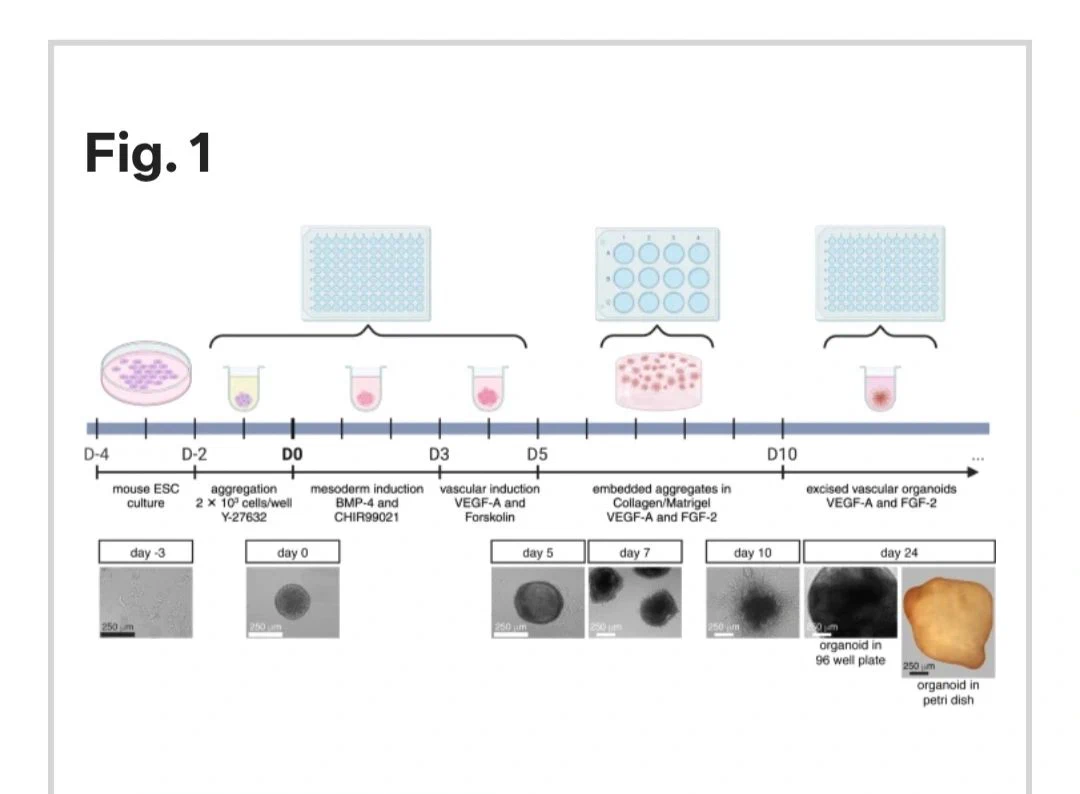
The experimental process begins with the isolation of cells, which may be obtained from tissue samples or non-invasive sources such as menstrual blood. These cells are then embedded in a three-dimensional extracellular matrix (commonly Matrigel), which provides structural and biochemical support similar to the natural cellular environment.
The next step involves carefully controlled culture conditions. Specific growth factors and signaling molecules are added to guide cellular behavior—regulating processes such as proliferation, differentiation, and spatial organization.
Over time, the cells begin to self-organize, forming structured clusters that gradually develop into organoid systems. This process is highly sensitive, and early experimental attempts often faced challenges such as low cell viability, lack of proper organization, and variability in growth patterns.
Through continuous optimization of environmental conditions—including matrix composition, nutrient supply, and signaling pathways—researchers were able to achieve stable and reproducible organoid formation.
This stepwise development highlights an important concept: organoids are not artificially constructed, but rather emerge through intrinsic cellular properties under the right experimental conditions.
#Computationalbiology #Menstrualblood #Reproductivebiology #Organoids #Biotechnology #Bioinformatics #WomenInScience