
In the previous post, I explored how molecular signals within menstrual blood reflect dynamic changes in gene activity. But how can these insights be translated into something we can observe and study more functionally?
★ This is where organoids come into the picture.
Organoids are three-dimensional, lab-grown structures derived from stem cells that can self-organize and mimic the architecture and function of real tissues. Unlike traditional cell cultures, they provide a more physiologically relevant model, allowing researchers to study complex biological processes in a controlled environment.
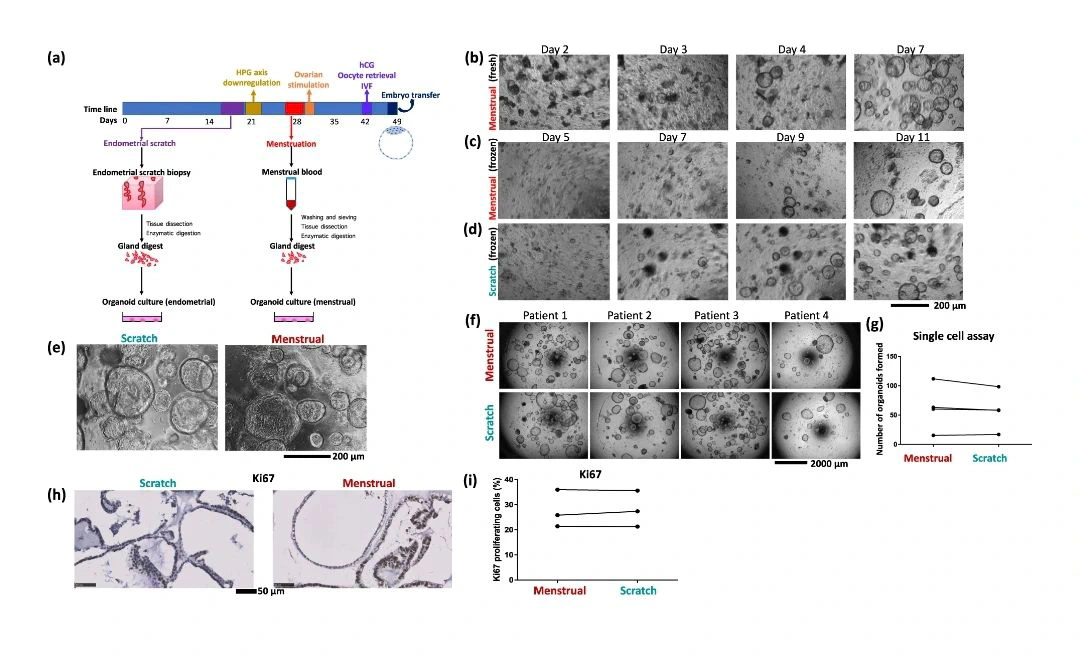
In the context of reproductive biology, organoids offer a unique way to recreate aspects of the endometrial environment in vitro. When combined with molecular level information such as gene expression patterns, they enable a deeper understanding of how cellular behavior is regulated under different physiological conditions.
🩸 A 2021 study titled “Menstrual flow as a non-invasive source of endometrial organoids” demonstrated that cells obtained from menstrual fluid can be used to generate organoids without the need for invasive biopsy procedures. These organoids retain transcriptomic profiles comparable to native endometrial tissue and exhibit functional responses to hormonal signals, including those involved in reproductive processes.
This highlights the potential of menstrual blood as a non-invasive and accessible source for developing advanced biological models, making it possible to bridge the gap between molecular data and functional tissue-level understanding.
💡 This shift—from analyzing signals to recreating biological systems—opens new directions for studying reproductive health, disease mechanisms, and potential therapeutic approaches.
#Computationalbiology #Reproductivebiology #Organoids #Biotechnology #Menstrualblood